IEEE eScience 2026 Workshop

AGENT4SC
1st Workshop on Agentic AI
for Large-scale Science

Advancing autonomous, trustworthy, and reproducible AI agents across the edge–cloud–HPC continuum for scientific discovery at scale.

Format Half-Day Workshop
Papers Due July 21, 2026 July 31, 2026 (Anywhere on Earth)
Submission EasyChair

Why Agentic AI for Large-scale Science?

Agentic AI is rapidly moving from "chat with tools" prototypes to autonomous systems that can reason, plan, coordinate, and act across complex digital research ecosystems. For the eScience community, this shift represents the emergence of a new control plane for computational and data-driven research.

Agents can request allocations, launch ensembles, steer workflows, move PB-scale datasets, trigger experiment/compute co-scheduling, and generate decisions that impact scientific validity — spanning the computing continuum from instruments and autonomous laboratories to simulations, data centers, cloud systems, and leadership-class HPC.

Recent closed-loop campaigns have revealed gaps in hallucination detection and mitigation, scheduling visibility, energy accounting, and reproducibility guarantees. At scale, even minor errors or blind spots can escalate into megawatt-hour waste, irreproducibility, and compromised scientific validity.

AGENT4SC provides a dedicated forum to advance scalable architectures, cross-continuum coordination, evaluation frameworks, verification and mitigation strategies, provenance, and observability mechanisms before agentic systems become embedded in production research workflows.

New Control Plane for Science

Agents reshaping how researchers generate, validate, share, and reuse data and knowledge across distributed infrastructures.

Operational Urgency

How to bound agent actions, ensure auditability, define safety controls, and support human-in-the-loop oversight for long autonomous campaigns.

Integrated Data Infrastructures

Scalable databases, vector stores, caching layers, provenance services, and knowledge graphs — performant and auditable under high concurrency.

Recurring Venue

AGENT4SC is intended to evolve into a recurring forum aligned with eScience's mission and the rapidly growing agentic AI community.

Key Topics

🏗️

System Architectures & Design Principles

Data and execution models and design principles for agentic AI beyond LLMs at scale.

🌐

Edge–Cloud–HPC Continuum

Agentic AI for cross-facility science spanning instruments, simulations, and learning across distributed infrastructure.

🧠

Agent Memory & Long-Horizon Reasoning

Planning and reasoning under extreme compute and data constraints for sustained scientific campaigns.

🗄️

Data & Metadata Architectures

Databases, vector stores, caching layers, and knowledge graphs designed for agentic systems at scale.

👤

Human-in-the-Loop & Oversight

Approval policies and escalation paths for long agentic workflow runs requiring steering and oversight.

🔍

Provenance & Observability

Auditability, reproducibility, monitoring, tracking, debugging, and observability of agentic systems at scale.

🛡️

Safety, Security & Accountability

Reliability and accountability mechanisms for agentic workflows operating in production scientific environments.

⚠️

Hallucination Detection & Recovery

Verification, failure detection, mitigation, and recovery techniques for large-scale agent-driven systems.

📊

Performance Modeling

Performance analysis and modeling for agentic systems under realistic scientific workloads.

🔗

Interoperability & Standardization

Interfaces, schemas, protocols, frameworks, and execution models for cross-platform agent coordination.

📅

Cross-Platform Scheduling

Allocation and resource awareness under agent-driven control across heterogeneous systems.

🚀

Real-World Experience Reports

Lessons from large-scale scientific deployments of agentic systems in production environments.

Call for Papers

AGENT4SC invites original research papers, position papers, and experience reports on the systems foundations required to operationalize agentic AI in large-scale scientific environments. We encourage submissions from academia, national laboratories, industry, and operational HPC centers.

Paper Formats

4 pages
Short Paper
Work-in-progress
not including references
8 pages
Full Paper
Complete research
not including references

Topics of Interest

We welcome contributions on any of the key topics listed above, including but not limited to:

  • Novel architectures for autonomous agents operating across distributed scientific infrastructure
  • Systems integration of agents with HPC schedulers, data services, and experiment instruments
  • Provenance, observability, and auditability for agent-driven scientific campaigns
  • Safety, hallucination mitigation, and failure recovery mechanisms at scale
  • Human-in-the-loop and oversight frameworks for long autonomous workflows
  • Experience reports from real deployments, including lessons learned and operational gaps

Submission Guidelines

  • AGENT4SC submissions must strictly follow the same IEEE eScience 2026 author guidelines used for the main conference, including the required IEEE paper format
  • All papers will receive at least three peer reviews from the Program Committee
  • Accepted papers will be published in the official eScience 2026 workshop proceedings
  • Authors are encouraged to include reproducibility information about relevant software, data artifacts, and AI assistants used
  • Note. The use of artificial intelligence (AI)-generated content shall be disclosed in the acknowledgements section of the paper. The AI system used shall be identified, and specific sections of the paper that use AI-generated content shall be determined, accompanied by a brief explanation regarding the level at which the AI system was used to generate the content. Authors are fully responsible for all content they submit. For more information, please see the IEEE submission policies.

Submission System

Papers must be submitted through EasyChair. When submitting the paper, make sure you select the track 1st Workshop on Agentic AI for Large-scale Science.

Important Dates

Papers Due July 31, 2026
Notification of Acceptance August 10, 2026
Camera-Ready Papers August 14, 2026
Workshop IEEE eScience 2026
Submit via EasyChair →

Workshop Schedule

Time Activity
9:00 – 9:10 Opening
Opening & Welcome Remarks
9:10 – 9:30 Full Paper
SPECTRA: Detecting Silent Failures in LLM Multi-Agent Systems via Dual-Layer Observability
Leonardo Militano, Thomas Michael Bohnert
9:30 – 9:50 Full Paper
Beyond the Session Boundary: Three Traces of Provenance in an Agent-Mediated Science Deployment
Zhiwei Li, Carl Kesselman, Jayanth Kumar Mallapu, Benjamin Xu, Kyle Bolo
9:50 – 10:10 Full Paper
Multi-Agent Discovery and Resource-Aware Autonomous Exploration of Scientific Datasets
Aashish Panta, Hugo Lee, Giorgio Scorzelli, Kyongsik Yun, Valerio Pascucci
10:10 – 10:30 Full Paper
Beyond Tool Execution: Evaluating Scientific MCP Interfaces with UXarray
Rajeev Jain, Robert Jacob
10:30 – 11:00 Break
☕ Coffee Break
11:00 – 11:05 Lightning
System Software Patterns for Agentic Scientific Codes in 2025
Robert Underwood, Bogdan Nicolae, Franck Cappello, Thorsten Hellert, Alex Hexemer, Amarjit Singh, Kento Sato, Yadu Nand Babuji, Ian Foster, Alok Kamatar, Kyle Chard
11:05 – 11:10 Lightning
Keeping the Agent Out of the Hot Loop: A Deterministic Control Plane for DFT Workflows Across HPC Centers
Daniel Speckhard, Lucas Pinede, Sagar Pal, Ali Ramlaoui, Hannah Bull, Cory Hargus, Victor Schmidt, Alexandre Duval
11:10 – 11:15 Lightning
A Reliable Closed-Loop Agent for Autonomous Center-of-Rotation Selection in Synchrotron Computed Tomography
Austin Yunker, Peter Kenesei, Hemant Sharma, Antonino Miceli, Ian Foster, Rajkumar Kettimuthu
11:15 – 11:20 Lightning
QUANTA: Quantum Network AgenTic Arena
Pablo Cesar Bedolla Ortiz, Joaquin Chung, Ian Foster, Rajkumar Kettimuthu
11:20 – 12:20 Panel
Panel Discussion
Structured discussion on agentic AI challenges — allocation requests, data movement, unsafe tool invocation, hallucination risks — toward actionable patterns for production scientific environments. Audience participation encouraged.
12:20 – 12:30 Closing
Closing Remarks

Panelists

Ana Gainaru

Dr. Ana Gainaru

Los Alamos National Laboratory, USA

Research Scientist in the Workflow Systems Group at Los Alamos National Laboratory, bridging traditional HPC with emerging data-driven disciplines through data and workflow management, performance optimization, resiliency, and runtime systems design. She co-led the Data Understanding thrust in the RAPIDS SciDAC project and led the Self-improving AI Models thrust in the Genesis project. Previously at Oak Ridge National Laboratory and Research Assistant Professor at Vanderbilt University; Ph.D. from the University of Illinois at Urbana-Champaign.
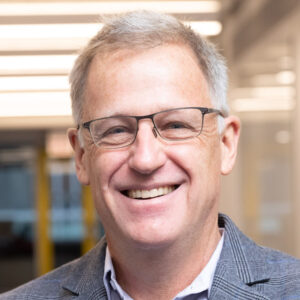
Ian Foster

Prof. Ian Foster

Argonne National Laboratory & University of Chicago

Arthur Holly Compton Distinguished Service Professor of Computer Science at UChicago, and Senior Scientist and Distinguished Fellow at Argonne National Laboratory, where he directs the Data Science and Learning Division. His research focuses on distributed, parallel, and data-intensive computing technologies, with applications spanning materials science, climate change, and biomedicine. Fellow of the AAAS, ACM, BCS, and IEEE, and an Office of Science Distinguished Scientists Fellow.

Ilkay Altintas

Dr. Ilkay Altintas

University of California, San Diego

Research scientist at UC San Diego, Chief Data Science Officer of the San Diego Supercomputer Center, and Founding Director of the Societal Computing and Innovation Lab (SCIL). Her research focuses on making computational data science and AI more reusable, programmable, scalable, accessible, and reproducible through scientific workflows and scalable computing systems. Founder of the WIFIRE Program for wildland fire innovations and PI of the NSF National Data Platform; Ph.D. from the University of Amsterdam.
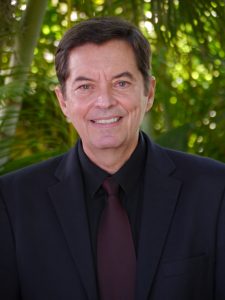
Jose Fortes

Prof. Jose Fortes

University of Florida, USA

AT&T Eminent Scholar and Professor of Electrical and Computer Engineering at the University of Florida, where he founded and directs the Advanced Computing and Information Systems (ACIS) Laboratory. He has authored or coauthored over 250 technical papers and is the principal investigator and Steering Committee Chair of the CENTRA collaborative. Fellow of both the IEEE and the AAAS, and UF's 2019–2020 Teacher/Scholar of the Year.

Organizers & Committee

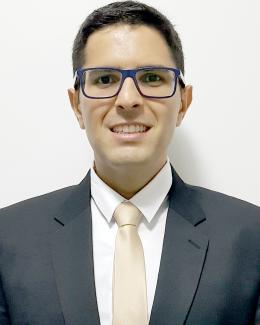
Amal Gueroudji

Dr. Amal Gueroudji

Argonne National Laboratory, USA

Assistant Computer Scientist at ANL (MCS), focusing on data management for HPC+AI workflows and agentic AI systems, with emphasis on vector databases, provenance-aware architectures, and trustworthy, scalable data infrastructures across heterogeneous environments. Ph.D. from Université Grenoble Alpes.

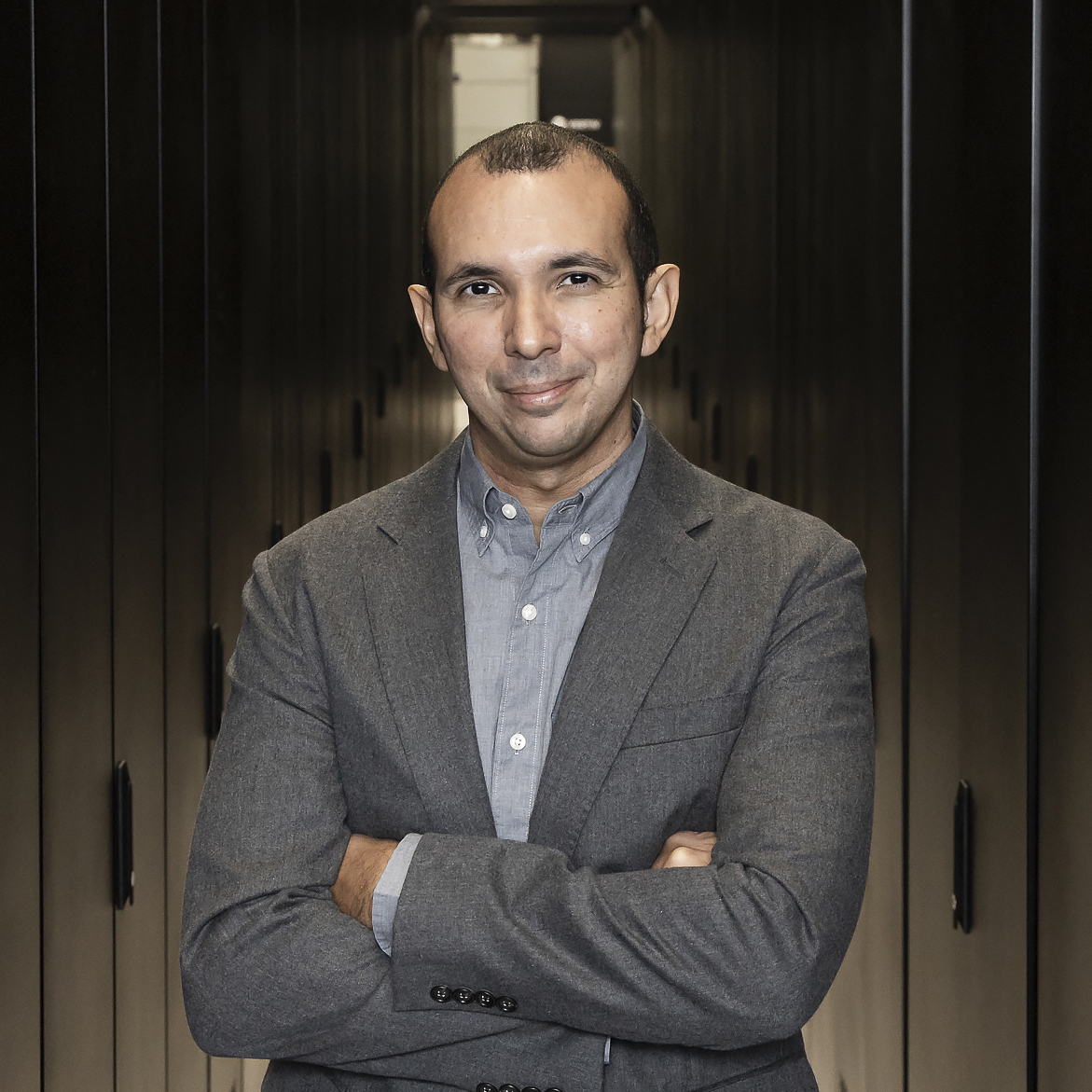
Bogdan Nicolae

Dr. Bogdan Nicolae

Argonne National Laboratory, USA

Computer Scientist at ANL (MCS) specializing in large-scale distributed storage, fault tolerance, and data-intensive computing. Expert in checkpointing, metadata decentralization, and storage virtualization for HPC and cloud systems. Ph.D. from University of Rennes 1 (France); prior research roles at Huawei Research Germany and IBM Research Ireland.

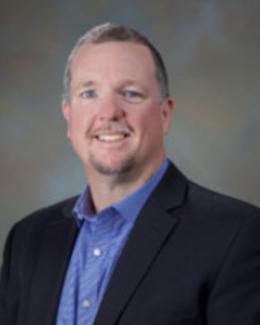
Renan Souza

Dr. Renan Souza

Oak Ridge National Laboratory, USA

Tech lead, senior software engineer and research scientist of intelligent data and AI platforms to accelerate scientific discovery. 15+ years of experience at IBM Research, ORNL, SLAC, and UFRJ. Focus on scalable, low-latency, observable, provenance- and metadata-first architectures. Author of 50+ papers and holder of 10+ USPTO patents.

Steering Committee

Rosa Filgueira

Dr. Rosa Filgueira

EPCC, University of Edinburgh, UK
Rafael Ferreira da Silva

Dr. Rafael Ferreira da Silva

Oak Ridge National Laboratory, USA
Kyle Chard

Dr. Kyle Chard

Argonne National Laboratory, USA
Patrick Widener

Dr. Patrick Widener

Oak Ridge National Laboratory, USA

Program Committee

Abhishek Shivalingaiah — Amazon Web Services (AWS), USA
Amal Gueroudji — Argonne National Laboratory, USA
Avinash Maurya — Argonne National Laboratory, USA
Daniel Rosendo — Oak Ridge National Laboratory, USA
Frédéric Suter — Oak Ridge National Laboratory, USA
Gabriele Padovani — University of Trento, Italy
Jack Marquez — University of Tennessee, USA
Le Chen — Argonne National Laboratory, USA
Loïc Pottier — Lawrence Livermore National Laboratory, USA
Matthieu Dorier — Argonne National Laboratory, USA
Nicole Marchioro — University of Trento, Italy
Orcun Yildiz — Argonne National Laboratory, USA
Patrick Widener — Oak Ridge National Laboratory, USA
Rajeev Jain — Argonne National Laboratory, USA
Renan Souza — Oak Ridge National Laboratory, USA
Robert Underwood — Argonne National Laboratory, USA
Sabrina Chaouche — IRT SystemX, France
Saket Sanjeev Chaturvedi — Argonne National Laboratory, USA
Seth Ockerman — University of Wisconsin, USA
Tainã Coleman — San Diego Supercomputing Center, USA
Valesca Moura — Fluminense Federal University, Brazil
Wes Brewer — Oak Ridge National Laboratory, USA
Woong Shin — Oak Ridge National Laboratory, USA

Workshop Venue

Co-located with IEEE eScience 2026

AGENT4SC is a workshop at the IEEE International Conference on e-Science, the premier forum for data-intensive and compute-intensive research across the full scientific lifecycle.

Duration Half Day
Expected Attendance 20 – 40
Submission System EasyChair